
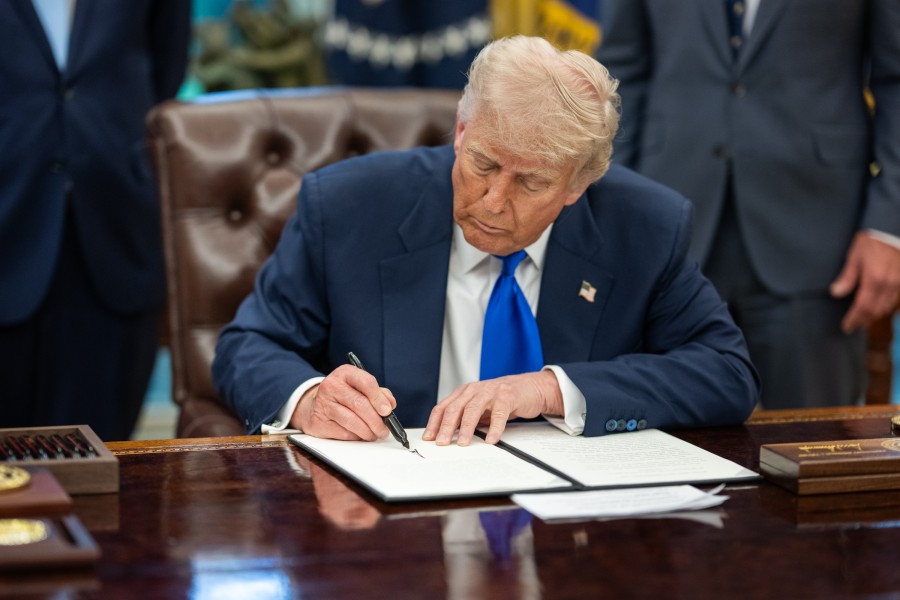
In a recent statement from the White House, US President Donald Trump emphasized the importance of preventing Iran from acquiring nuclear weapons. He underscored that the United States stands ready to take additional measures if Iran does not adhere to existing agreements designed to halt its nuclear ambitions. Trump argued that the dangers of nuclear proliferation outweigh any possible economic repercussions, reinforcing that the US would respond should Iran breach its commitments or act in ways that destabilize the region.
A key point of progress, according to Trump, is the reopening of the Strait of Hormuz, a crucial passageway for global oil and natural gas shipments. He hailed this development as a significant victory for international trade and energy markets. This comes amid delicate negotiations between Washington and Tehran, following a recently signed memorandum of understanding. The agreement addressed maritime security and offered sanctions relief, while ongoing talks about Iran’s nuclear program are expected to continue over a 60-day period.
US Vice President JD Vance announced that Iran had consented to the return of International Atomic Energy Agency inspectors to verify that the country does not develop nuclear weapons. However, Iranian officials challenged this assertion, indicating that no new commitments regarding their nuclear activities had been established. They stressed that discussions are still in progress, linking broader regional concerns such as maritime security and sanctions relief to future diplomatic engagements.
Despite claims from US officials that energy shipments through the Strait of Hormuz have resumed to normal levels, independent data suggests that the volume of shipping traffic has not yet reached pre-conflict figures. These developments unfold amid ongoing regional tensions involving Iran, Israel, and Lebanon. Israel has voiced skepticism regarding the current diplomatic efforts, arguing that they fail to fully address Iran’s nuclear and missile capabilities.
The overarching aim of Washington remains to thwart Iran’s pursuit of nuclear weaponry while maintaining regional peace through diplomacy supported by deterrence. As the situation evolves, the US continues to balance its strategic objectives of non-proliferation with the pursuit of stability in the Middle East.