
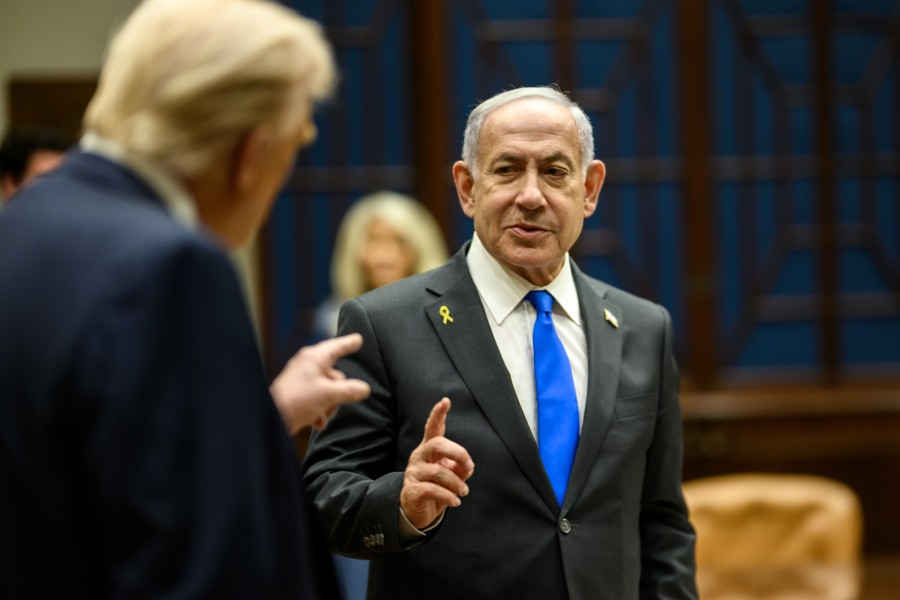
Prime Minister Benjamin Netanyahu of Israel has emphasized the necessity for Israel to lessen its military reliance on the United States, advocating for a bolstered domestic defense industry. Speaking to reserve combat officers in the Gush Etzion settlement bloc, Netanyahu acknowledged the long-standing support from the U.S. but urged the establishment of an independent defense production capability to meet Israel’s military needs. He highlighted the ongoing challenges posed by Iran and its allied groups and underscored that Israel’s future security demands enhanced military strength, advanced technology, and leadership development.
Netanyahu’s statements come amidst discussions between Washington and Jerusalem on a revised 10-year security cooperation framework. This new framework aims to shift the relationship from one heavily reliant on U.S. military aid to a more balanced partnership. His remarks also mirror the growing unease in Israel about potentially being sidelined in recent U.S.-Iran diplomatic engagements. Notably, Israel was excluded from discussions around a recent memorandum of understanding between the United States and Iran, aimed at reducing hostilities and preventing further conflict.
The U.S.-Iran agreement includes clauses impacting various regional issues, such as operations in Lebanon, where Israeli forces continue to confront Hezbollah. Iran has demanded an Israeli withdrawal from Lebanese territory, while Israel insists that such a move will only occur once security threats are fully addressed. This situation underscores the friction over the extent of U.S. influence on Israeli military strategies. President Donald Trump recently hinted at the substantial leverage Washington holds over Israeli actions due to their close alliance.
Criticism from some Israeli officials has emerged regarding the U.S.-Iran agreement, arguing that critical goals, such as dismantling Iran’s nuclear and ballistic missile programs, remain unfulfilled. Nevertheless, the United States has reiterated its dedication to preventing Iran from acquiring nuclear weapons, with the possibility of renewed actions if diplomatic efforts falter. U.S. Vice President JD Vance defended the agreement, highlighting the significant military support provided to Israel by Washington and stressing the importance of maintaining the strategic partnership between the two nations.