
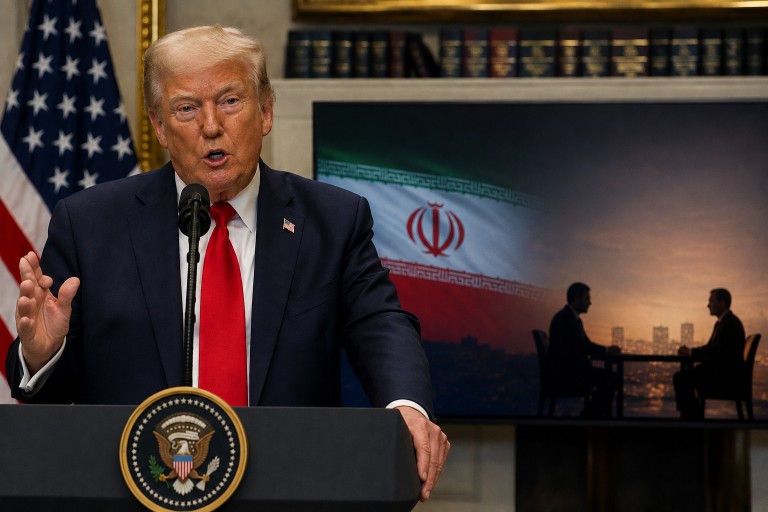
In a surprising turn of events, President Donald Trump announced that a planned military strike on Iran was halted after receiving promising indications that diplomatic negotiations could soon lead to a framework agreement. This potential deal aims to address international concerns regarding Iran’s nuclear ambitions and reopen the vital maritime passageway, the Strait of Hormuz. Trump’s decision to call off the attack reportedly came after appeals from Iran and other nations in the Middle East, with Israel expressing support for the diplomatic approach.
Despite Trump’s assertions, Iranian authorities have denied making any request to stop the U.S. military action. They labeled Trump’s claim as inaccurate and maintained that their military forces remain vigilant, prepared to respond to any aggressive actions. Iranian officials cautioned that any military intervention by the United States or Israel would be met with a robust retaliation, which could include targeting the region’s critical energy infrastructure.
The persistent tension between the U.S. and Iran has significantly affected global energy markets, heightening fears over the stability of oil supplies and regional security. Uncertainty looms over shipping activities in the Strait of Hormuz, a crucial chokepoint for the world’s oil transportation, exacerbating concerns about potential disruptions.
The situation underscores the fragile geopolitical landscape of the Middle East, where diplomatic and military strategies often intersect. As nations navigate the complexities of international relations, the prospect of a peaceful resolution remains uncertain. However, the possibility of a diplomatic breakthrough offers a glimmer of hope amid the ongoing volatility.