
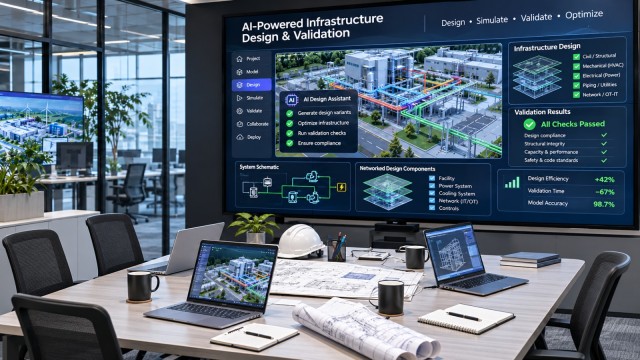
InfrOS has introduced its Model Context Protocol (MCP) Server, a new tool designed to streamline cloud infrastructure design and validation through AI-powered assistance. This development aims to enhance how engineering teams make infrastructure decisions by integrating cloud infrastructure planning, architecture optimization, and validated Infrastructure-as-Code workflows into AI-supported development environments. The initiative seeks to provide a more reliable framework for making technical decisions based on concrete requirements, cost considerations, and performance data, rather than solely relying on AI-generated code.
Operating as a data infrastructure operating system, InfrOS focuses on aiding organizations in the design and management of their cloud infrastructures. The MCP Server extends these capabilities by facilitating interaction through preferred AI tools, supporting both the creation of new infrastructures and the enhancement of existing ones. This platform allows users to initiate projects, manage design versions, and update technical requirements while identifying missing information prior to embarking on architecture designs.
The MCP Server provides users with multiple design options, allowing them to either select an existing organizational landing zone or build an architecture from scratch. It offers architecture proposals complete with estimated monthly costs, quality ratings, and recommendations. Users can examine individual infrastructure components, including their services, configurations, deployment regions, and associated costs, allowing for informed decision-making.
A significant feature of the MCP Server is its capability to generate and retrieve Terraform files for proposed architectures. This includes monitoring the generation process and retrieving completed project files for use in development environments. Moreover, the Prove Before Deploy feature enables testing of generated Terraform in a validation sandbox, assessing deployment feasibility and performance benchmarks without affecting the customer’s production environment.
InfrOS has also incorporated administrative and security controls into the MCP Server. These include managerial oversight of landing zones and infrastructure constraints, as well as GitHub integration for read-only repository analyses to identify existing Terraform versions and secrets-management practices. OAuth authorization ensures clear distinctions between various user permissions and activities, while also allowing users to review and revoke connected AI assistants.
Importantly, the MCP Server does not automatically modify customer repositories or deploy infrastructures into production environments. Such actions remain under the control of engineering teams. The server is currently available in preview to eligible customers, with design runs and Terraform generation consuming organization credits, marking a notable advancement in the integration of AI in cloud infrastructure engineering.
About InfrOS
InfrOS is an IT Infrastructure Operating System that helps teams decide what to build, prove it before production, and evolve it confidently as conditions change. The platform gathers business and technical requirements, evaluates and compares architecture options, validates expected outcomes through benchmarking, simulation and emulation, and delivers reviewable production-ready infrastructure as code with FinOps and compliance guardrails. InfrOS continuously monitors infrastructure for drift and keeps workloads aligned as performance requirements, business priorities and cloud environments evolve. Cloud-agnostic by design, InfrOS supports Amazon Web Services, Google Cloud, Microsoft Azure, and Oracle Cloud Infrastructure, including multi-cloud environments. Learn more at infros.io.
Sarah Thorson
Magnitude, Inc.
Legal Disclaimer:
The information contained in this article has been provided by independent third-party contributors, clients, or content partners. We do not independently verify the accuracy, completeness, legality, ownership, licensing, or reliability of submitted content, including text, images, videos, trademarks, or other media materials. The submitting party is solely responsible for ensuring that all content, including images and media assets, complies with applicable copyright, trademark, licensing, and intellectual property laws. We disclaim liability for any unauthorized use of copyrighted or proprietary materials by third parties. If you believe that any content published on this platform infringes your intellectual property rights, kindly contact the author above for prompt review and resolution.