
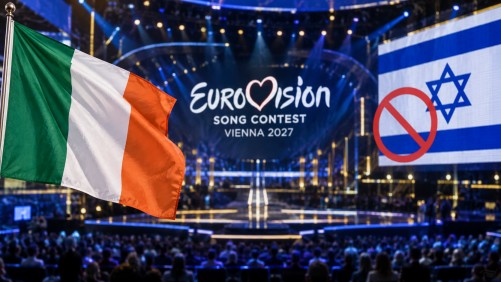
The ongoing humanitarian crisis in Gaza continues to reverberate across Europe, influencing major cultural events such as the Eurovision Song Contest. Ireland has announced that it will neither participate in nor broadcast the 2027 Eurovision Song Contest, citing the persistent conflict and civilian casualties in Gaza as the primary reasons for its decision.
RTÉ, Ireland’s national broadcaster, confirmed its stance, emphasizing that it cannot justify involvement in the event while such significant humanitarian issues remain unresolved. A spokesperson for RTÉ also expressed concerns about the limitations imposed on international journalists trying to access Gaza, underscoring the challenges in obtaining independent reporting from the region.
The European Broadcasting Union (EBU), which is responsible for organizing the annual Eurovision contest, acknowledged Ireland’s decision and stated its intention to maintain dialogue with RTÉ. The hope is that Ireland might return to the competition in future years, should the situation change.
Ireland is not alone in its stance. The country previously joined a boycott of the 2026 Eurovision Song Contest, alongside nations such as the Netherlands, Spain, Iceland, and Slovenia, in protest against the EBU’s decision to permit Israel’s participation. For the upcoming 2027 contest, the Netherlands has also indicated its non-participation, although Dutch broadcasters are exploring the possibility of another broadcaster stepping in to represent the country. Meanwhile, Spain, Iceland, and Slovenia have not yet disclosed their plans regarding the event.
The 2027 Eurovision Song Contest is slated to take place in Burgas, Bulgaria, in May. As more countries deliberate their participation, the broader geopolitical context continues to influence the cultural landscape of one of Europe’s most popular entertainment events.