
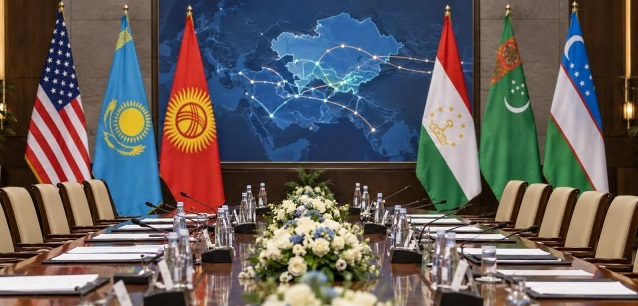
At the C5+1 Ministerial Meeting held in Samarkand on October 19, the United States and five Central Asian nations reaffirmed their commitment to strengthening economic and security cooperation. The discussions, involving US Secretary of State Marco Rubio and the foreign ministers of Kazakhstan, Kyrgyzstan, Tajikistan, Turkmenistan, and Uzbekistan, focused on enhancing trade, infrastructure, energy, and education partnerships, underscoring a long-term vision of mutual respect for sovereignty and territorial integrity.
A joint statement from the meeting emphasized plans to boost regional connectivity and economic integration, aiming to expand trade and investment between the US and Central Asia. The six countries agreed to improve transportation networks and invest in infrastructure along the Trans-Caspian International Transport Route, an essential corridor linking Central Asia to global markets. Additionally, efforts will be directed toward enhancing regional trade, customs procedures, industrial cooperation, and digital connectivity, with a particular focus on e-commerce and English-language training.
Energy cooperation and the development of critical minerals emerged as key priorities. Participants supported the idea of creating integrated supply chains, increasing mineral exploration and processing, and producing higher-value goods for international markets. Uzbekistan’s Foreign Minister Bakhtiyor Saidov proposed a strategic partnership in critical minerals, focusing on geological exploration and advanced processing technologies to foster local industrial clusters.
Security cooperation was another focal point, with commitments to combat terrorism, transnational organized crime, and cybercrime. The countries also pledged to uphold nuclear security and ensure the peaceful use of nuclear energy. Beyond these areas, the meeting highlighted the importance of preserving cultural heritage and expanding professional and cultural exchanges among the nations.
Secretary Rubio highlighted the strategic importance of Central Asia as a historic trade crossroads and emerging investment destination. He noted that the C5+1 framework signifies the US’s commitment to fostering peaceful relations with the region. Rubio referenced the previous C5+1 meeting in Washington, which resulted in $25 billion in new agreements across various sectors, including transportation and energy.
Assuming the co-chairmanship of the C5+1 Secretariat, Uzbekistan plans to build on past achievements and focus on translating commitments into practical results. The meeting underscored the shared interest of the United States and Central Asian nations in deepening economic ties, improving regional connectivity, and expanding cooperation on security and strategic resources.