
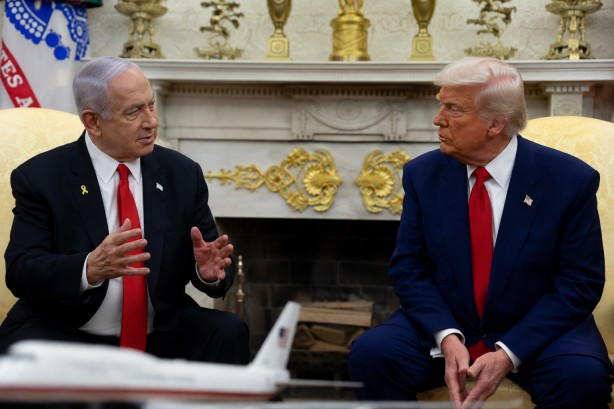
In a significant meeting at the White House, Israeli Prime Minister Benjamin Netanyahu and U.S. President Donald Trump delved into critical issues such as Iran, regional security, and the enhancement of U.S.-Israel cooperation. The discussions were broad, exploring various strategies to address the challenges posed by Iran, including the possibility of diplomatic agreements, the imposition of economic sanctions, and the contemplation of military actions. These talks were characterized as an exchange of ideas rather than a push for any particular strategy.
Netanyahu voiced skepticism regarding Iran’s commitment to any prospective agreements, though he did not advocate for new U.S. military interventions. Both leaders underscored their mutual commitment to preventing Iran from acquiring nuclear weapons. Additionally, they examined strategies to intensify economic pressure on Iran while mitigating repercussions on global energy markets. Netanyahu was particularly insistent that Iran should not be allowed to exploit the Strait of Hormuz as a bargaining chip in negotiations.
The discussion also ventured into regional security dynamics, focusing on Israel’s military activities in Syria and southern Lebanon. Netanyahu utilized maps to articulate Israel’s security concerns, stressing the importance of maintaining defensive positions to counter potential threats. The dialogue emphasized the need to bolster regional security and stability through continued vigilance and cooperation.
In terms of defense cooperation, the leaders explored the future trajectory of U.S.-Israel relations. Netanyahu suggested a gradual reduction in Israel’s dependence on American military aid over the next decade, while simultaneously proposing an expansion of joint defense research and development initiatives. This approach aims to foster a more balanced and collaborative defense partnership between the two nations.
Despite speculative reports suggesting tensions, an Israeli official clarified that the relationship between Netanyahu and Trump remains close and cooperative. The meeting reflected a strong alignment in regional policy objectives and a shared resolve to address pressing security concerns through collaborative efforts.