
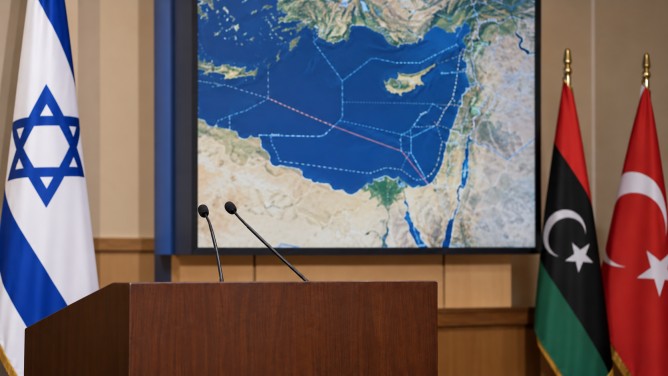
Israel has voiced strong disapproval of the Libyan parliament’s decision to ratify a maritime agreement with Türkiye, expressing concerns that the agreement could jeopardize the maritime rights of regional allies, particularly Greece and Cyprus. This agreement delineates boundaries in the eastern Mediterranean, a region of significant interest due to its potential natural gas reserves.
The move has sparked opposition from several regional players, including Greece, Cyprus, and Egypt, who argue that the agreement conflicts with their own maritime claims. The European Union has also questioned the legal validity of the deal, stressing the importance of respecting the sovereign rights of its member states as per international law.
Israel’s Foreign Ministry has criticized Türkiye for allegedly fostering instability in the eastern Mediterranean. The ministry’s statement underscored Israel’s close ties with Greece and Cyprus, against the backdrop of strained relations with Türkiye, aggravated by disagreements over the situation in Gaza.
Defending the agreement, Türkiye has maintained that the deal aligns with international law and serves the mutual interests of both nations involved. Turkish Foreign Minister Hakan Fidan stated that the Libyan parliament’s approval merely formalizes an arrangement already deemed effective by Türkiye.
This development also highlights the ongoing political divide within Libya. The eastern part of the country, under the leadership of military commander Khalifa Haftar, remains at odds with the internationally recognized government in Tripoli, despite growing ties with Ankara in recent years.
The European Union has reiterated the necessity for adherence to international maritime law and the respect of sovereign rights of all member states. Meanwhile, Greece has escalated the issue to the United Nations, cautioning that the maritime agreement could pose threats to security and stability throughout the eastern Mediterranean.