
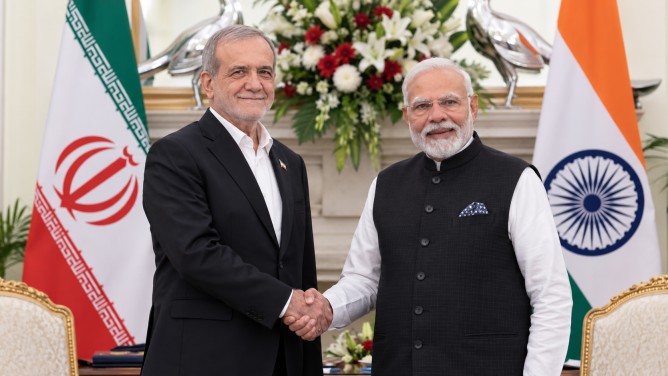
In recent discussions on the sidelines of the Shanghai Cooperation Organisation (SCO) summit, Iran has emphasized the depth and significance of its relationship with India. This came after a meeting between Prime Minister Narendra Modi and Iranian President Masoud Pezeshkian, where Iran’s Foreign Ministry spokesperson, Esmail Baghaei, underscored the historic and long-standing ties between the two nations. Baghaei particularly pointed out the importance Tehran places on its economic and trade collaborations with New Delhi.
During the talks, Modi and Pezeshkian explored various topics, notably the development of the Chabahar Port, which remains a focal point of India-Iran cooperation. The leaders also shared perspectives on regional developments and expressed mutual interest in promoting enduring peace. This interaction highlights India’s dedication to bolstering its relationship with Iran across multiple sectors.
The discussions did not go unnoticed by the United States, with U.S. Secretary of State Marco Rubio commenting on the matter. While acknowledging the sovereignty of nations to shape their foreign policies, Rubio cautioned against any measures that might help Iran circumvent U.S. sanctions. This reflects the complex geopolitical landscape that surrounds the diplomatic engagements between India and Iran.
Both leaders reiterated their commitment to strengthening bilateral ties amidst the ongoing regional challenges. Their dialogue is part of broader diplomatic efforts to foster peace and stability in the region. The meeting at the SCO summit thus served as a platform for India and Iran to reaffirm their partnership and discuss strategic interests.
Overall, the interactions between Modi and Pezeshkian at the SCO summit signal a continued emphasis on collaboration, particularly in areas that are strategically important for both nations. As the international community watches these developments, the longstanding relationship between India and Iran continues to play a significant role in their respective foreign policy agendas.