
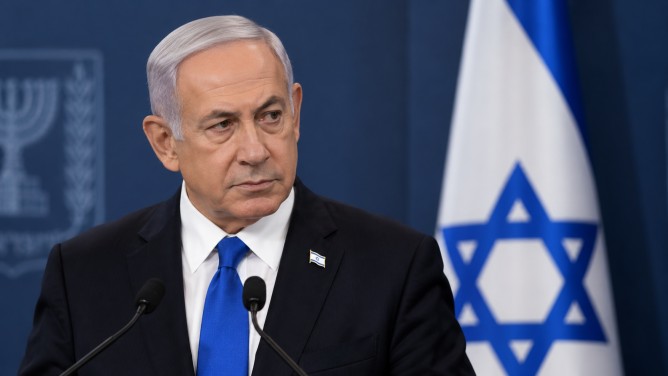
In a recent survey examining the Israeli political landscape, Prime Minister Benjamin Netanyahu’s supporting bloc and the opposition parties are neck and neck, each securing 53 seats. Arab parties are projected to hold 14 seats in the Knesset. However, neither group reaches the essential threshold of 61 seats required for a majority in the Israeli parliament.
This latest poll reveals a significant shift from earlier predictions, which favored the opposition with a 57-48 lead. This change is primarily due to the emergence of two right-wing parties: Ofer Winter’s People of Israel, projected to gain four seats, and a coalition of Religious Zionism and Zehut, anticipated to secure six seats.
Netanyahu’s Likud party is closing in on the opposition frontrunner, Yashar, which is led by Gadi Eisenkot. Current projections suggest Yashar will obtain 22 seats, while Likud follows closely with 21 seats. Meanwhile, the Joint List, comprising mainly Arab parties, has increased its projected support to nine seats.
In contrast, the B’Yachad alliance, led by Naftali Bennett and Yair Lapid, has seen a decline, now expected to achieve only 12 seats. Additionally, several parties, including Unity, Blue and White, and Zionist Home-The Reservists, are at risk of not meeting the electoral threshold required to secure representation in the Knesset.
The poll, conducted among 940 respondents, comes with a margin of error of 3.4%, highlighting the fluid and competitive nature of the current Israeli political environment.