
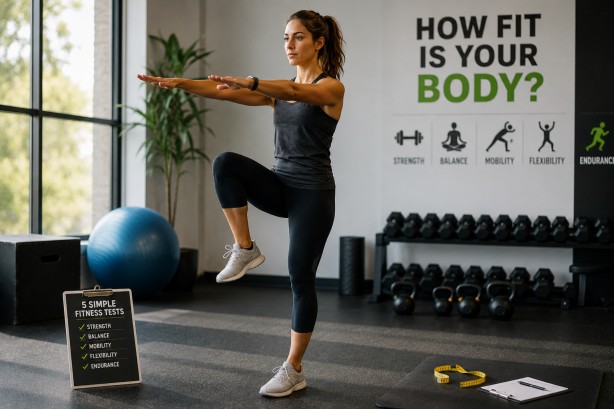
Functional fitness is about more than just the ability to lift heavy weights or run long distances. It encompasses the capacity to execute everyday movements, such as squatting, standing up from the floor, and maintaining balance. These movements offer valuable insights into one’s strength, mobility, flexibility, grip, and balance, all of which are critical components of functional fitness. Many of these exercises can be performed at home with little to no equipment, as long as they are done safely.
One such movement is the deep squat hold. This exercise involves standing with feet about hip-width apart and lowering into a deep squat while keeping heels on the ground. The goal is to maintain the position for up to 60 seconds without support. This movement assesses ankle, knee, and hip mobility, as well as lower-body strength and control. If maintaining this position is challenging or if heels lift off the ground, it might indicate that these areas require further attention.
Another useful movement is the dead hang. By using a secure pull-up bar, individuals can hold their body off the ground with extended arms to evaluate grip strength and upper-body endurance over a 30-second hold. This exercise also tests shoulder stability and control. Beginners should ensure that the bar is securely fastened and avoid this exercise if they have shoulder injuries that could worsen by hanging.
Getting up from the floor without using hands, knees, or forearms is a simple yet telling movement. It requires a mix of lower-body strength, balance, coordination, and mobility. Challenges in performing this movement could highlight areas needing improvement. However, it’s important to remember that factors such as age, flexibility, previous injuries, and fitness levels can significantly influence performance, so this should not be considered a definitive measure of health.
Additional movements like the forward fold and single-leg balance further test flexibility and balance, respectively. The forward fold involves bending forward with straight legs to see how far the hands can comfortably reach, testing flexibility primarily in the hamstrings and back muscles. The single-leg balance, which can be made more challenging by closing the eyes, tests balance and proprioception. These exercises, while not diagnostic, offer a snapshot of various functional fitness components, highlighting areas for improvement through safe and consistent exercise.