
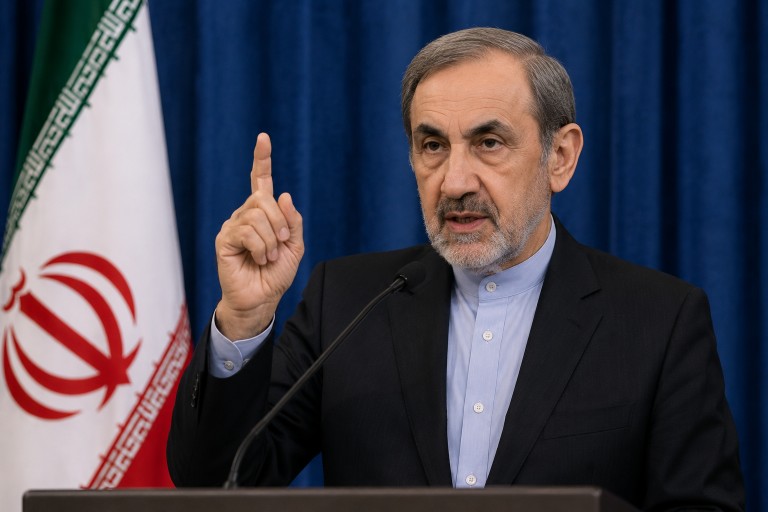
In a recent development, Iran has directed a stern warning at the United States following remarks by President Donald Trump that the interim agreement intended to de-escalate tensions between the two nations was “over.” Ali Akbar Velayati, a prominent advisor to Iran’s supreme leader, criticized the U.S. for exacerbating tensions in the Gulf region. He argued that Trump’s announcement had renewed the risk of conflict and cautioned that Iran was ready to act in response to any further military provocations.
Velayati emphasized that Iran was prepared to defend itself, stating that the nation had its “finger on the trigger” and would not remain passive in the face of what he described as acts of provocation and threats. The situation has intensified following President Trump’s comments during a NATO summit, where he declared that the ceasefire agreement was no longer valid. This declaration came after Iran launched attacks on U.S. military bases located in Bahrain and Kuwait, which were a reaction to previous U.S. strikes on Iranian targets after assaults on commercial vessels in the strategically vital Strait of Hormuz.
The American president also hinted at the possibility of further military measures against Iran, suggesting that U.S. forces might conduct additional strikes if Iran continues its current course of action. He identified potential targets, including critical Iranian sites such as Kharg Island, indicating that these could be in the crosshairs if hostilities escalate.
The exchange of threats between the two countries has significantly undermined any remaining hopes of reviving the ceasefire. The heightened rhetoric and military posturing have stoked fears of a more extensive conflict in the Gulf region, an area already fraught with instability. This ongoing tension is having a ripple effect, disrupting regional security and affecting global energy markets.