
Amid growing internal divisions, senior Democrats in the House are taking a stand against a proposed amendment that seeks to halt $3.3 billion in U.S. aid to Israel. This proposal, introduced by Republican Representative Thomas Massie, has become a flashpoint for debate within the Democratic Party regarding the extent of American support for Israel.
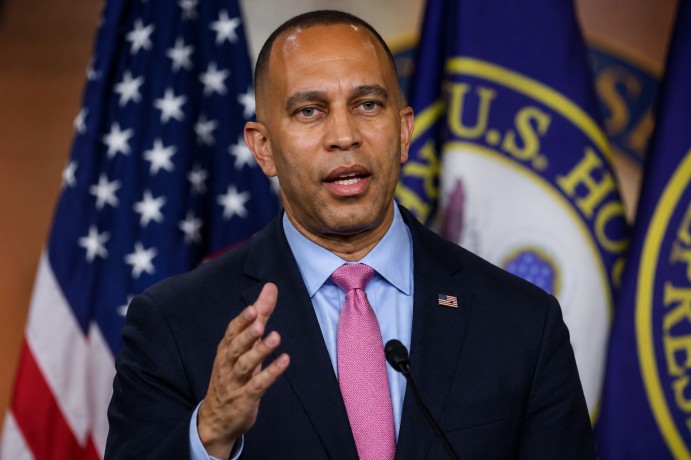
House Minority Leader Hakeem Jeffries has voiced his opposition to the amendment, labeling it as “overly broad.” He expressed concerns that the measure could inadvertently hinder humanitarian efforts and diminish initiatives aimed at combating militant groups like Hamas and Hezbollah. Meanwhile, House Democratic Caucus Chair Pete Aguilar also stands against the proposal, though he conceded that the time has come to reevaluate U.S.-Israel relations, noting that Israel’s current policies have led to increased regional isolation.
Conversely, Congressional Progressive Caucus Chair Greg Casar has advocated for his colleagues to back the amendment, emphasizing that U.S. taxpayer dollars should not be used to fund Israel’s military actions. Casar suggests that the Democratic Party needs to reassess its approach toward the Israeli-Palestinian conflict, reflecting a shift in sentiment among some progressive lawmakers and their constituents.
This debate surfaces at a time when the Democratic Party is encountering intensified pressure from both voters and progressive factions within its ranks, who are calling for significant shifts in U.S. policy regarding Israel, especially in light of the ongoing conflict in Gaza. The contrasting perspectives within the party highlight the increasing complexity of the issue.
Jeffries has also called for what he describes as a “major reset” in the approach to U.S.-Israel relations. While reaffirming support for Israel’s right to exist, he also advocates for the establishment of a Palestinian state. Jeffries proposed that future U.S. military aid should be aligned with human rights standards and reflect Israel’s capacity to shoulder more of its defense expenses independently. This nuanced stance illustrates the multifaceted nature of the debate and the challenges ahead for the Democratic Party in navigating its policy toward Israel.