
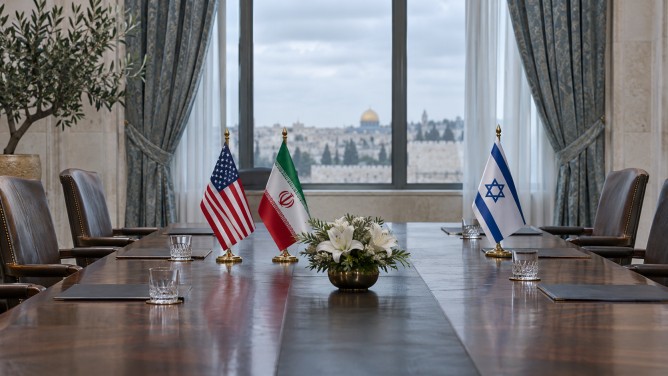
Negotiations involving the United States, Iran, and Qatar are facing a potential setback due to concerns about Israeli Prime Minister Benjamin Netanyahu’s stance on the ongoing diplomatic efforts. The talks aim to resolve the conflict between Washington and Tehran, but there is apprehension that Netanyahu might push for renewed military action against Iran, which could derail these efforts.
Officials involved in the negotiations have expressed worry that Netanyahu could authorize another military operation, potentially reigniting large-scale fighting that has been relatively dormant since April. The diplomatic efforts are part of U.S. President Donald Trump’s strategy, which involves balancing diplomatic negotiations with continued economic pressure on Iran. This includes maintaining a blockade of Iranian ports and tightening sanctions to compel Tehran to comply with American demands regarding its nuclear program and control over the Strait of Hormuz.
Despite these challenges, Iran has shown a willingness to engage in discussions about its nuclear program through Qatari mediation. However, significant disagreements persist. Tehran has refused U.S. demands to transfer its highly enriched uranium stockpiles out of the country. Instead, Iran has proposed to reduce the enrichment levels under United Nations supervision. Iran is also seeking sanctions relief and compensation for infrastructure damage caused during the conflict—demands that Washington has so far rejected. Another contentious issue is Iran’s proposal to impose tolls on certain vessels passing through the Strait of Hormuz.
U.S. Vice President JD Vance, a proponent of a diplomatic resolution, has reportedly voiced concerns over Netanyahu’s repeated calls for renewed military action. Vance believes that the Israeli leader has provided misleading assessments of the conflict and its potential consequences, which could jeopardize the diplomatic progress made thus far.
Despite these obstacles, some negotiators remain hopeful that a comprehensive agreement—or at least a temporary arrangement—could be reached to prevent a resurgence of conflict. The ongoing discussions underscore the complexities involved in balancing diplomatic efforts with geopolitical interests in the Middle East.