
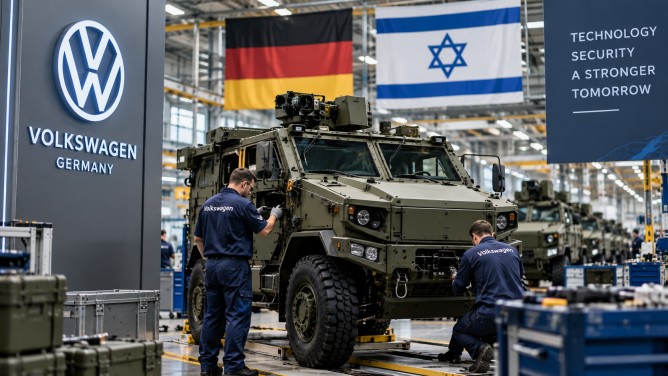
Volkswagen is set to transform its Osnabrück facility in Germany into a defense production hub once automobile manufacturing ceases in 2027. This transition will begin with a collaboration with Israeli defense firm Rafael. The German auto giant plans to sell the facility to Aurelius Capital, a Tel Aviv-based entity, in conjunction with the state of Lower Saxony, which holds a significant stake in Volkswagen. The initial deal involves the production of systems and components for air defense, catering to Germany and other European nations.
The shift in production is anticipated to secure at least 1,200 jobs at the Osnabrück site. Volkswagen believes this agreement could pave the way for more defense-related ventures and help redefine the industrial future of the plant. The company’s decision to halt vehicle production there by 2024 was driven by declining demand, escalating production costs, and increased competition from Chinese carmakers. Furthermore, Volkswagen is undergoing a substantial restructuring plan that includes cutting approximately 100,000 jobs across the organization in the coming years.
Aurelius Capital, which has interests in cybersecurity, drone technology, and satellite systems, notes that the Osnabrück plant boasts skilled workers, advanced manufacturing capabilities, and a well-established production infrastructure. These attributes would be challenging to replicate from scratch, making the facility an attractive investment. The partnership with Volkswagen and the local government aims to leverage these strengths to support defense manufacturing.
This strategic conversion at Osnabrück may serve as a blueprint for other Volkswagen plants facing uncertain prospects. Across Europe, defense production is increasingly being considered a viable alternative for underutilized automotive factories. Other industrial enterprises are also exploring similar transitions, recognizing the potential of repurposing existing facilities to meet the growing demand for defense products.