
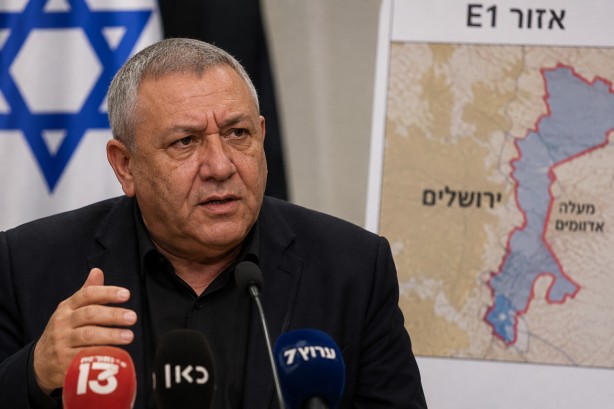
In a significant development within Israel’s political landscape, Gadi Eisenkot, the leader of the Yashar party, has expressed strong opposition to the pursuit of a two-state solution in the wake of the Hamas attack on October 7, 2023. While he dismissed the feasibility of a two-state resolution post-attack, Eisenkot also took a firm stand against the government’s contentious E1 settlement initiative in the West Bank, suggesting it risks harming Israel’s global reputation. The E1 plan, which proposes expanding settlements between Jerusalem and Ma’ale Adumim, poses a challenge to maintaining territorial continuity among key Palestinian population areas.
The Israeli government has faced scrutiny after it recently issued a tender for the construction of over 1,000 housing units in the E1 zone. This move has drawn sharp criticism from the international community, with the European Union reportedly contemplating potential actions against Israel should the project advance. Eisenkot’s remarks underscore the growing tension surrounding settlement policies, as he argues that such measures could further isolate Israel on the global stage.
Amidst the debate over settlement expansion, Eisenkot has also directed criticism at Finance Minister Bezalel Smotrich and National Security Minister Itamar Ben Gvir. He attributes the escalation of settler violence in the West Bank to their policies, contending that these actions have undermined the authority of the Israel Defense Forces in the region. Eisenkot warns that these developments are detrimental not only to Israel’s standing in the international community but also to its national interests.
In response to Eisenkot’s critique, Smotrich has defended the E1 construction plans, arguing that it is a strategic move to prevent the establishment of a Palestinian state near Jerusalem. This defense highlights the internal divisions within Israeli politics regarding settlement policies and their implications for future peace efforts.