
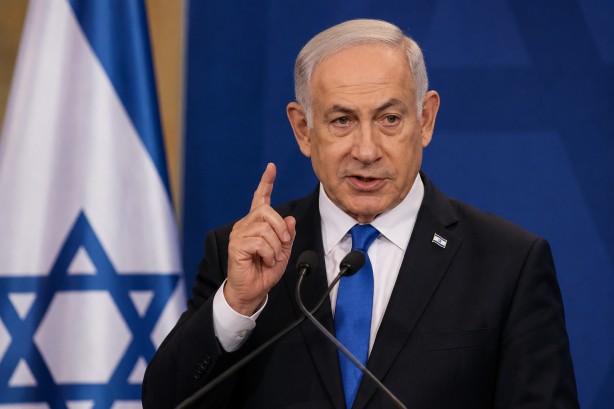
As the October 27 election approaches, Israeli Prime Minister Benjamin Netanyahu has issued a plea to right-wing voters, urging them to consolidate their support behind his Likud party. He cautioned that casting votes for smaller parties could jeopardize the strength of his governing coalition if these parties fail to surpass the electoral threshold required to secure seats in the Knesset.
Netanyahu’s appeal is driven by concerns that the emergence of several new right-wing parties could fragment the conservative vote. These smaller factions could potentially siphon off crucial support from Likud and other coalition partners, thereby diminishing their overall electoral influence. By highlighting the risk of votes being “wasted,” Netanyahu aims to rally voters to ensure a unified front in the upcoming election.
Polls suggest that Netanyahu’s political bloc is currently trailing, increasing the stakes for the prime minister who has been a dominant force in Israeli politics for over a decade. He has emphasized that a divided vote among right-wing supporters could inadvertently pave the way for opposition parties to form the next government, a scenario that could upend the current political landscape.
The political dynamics of Israel’s electoral system mean that parties must secure a minimum percentage of the national vote to enter the Knesset. This threshold poses a significant challenge for smaller parties, which, if unsuccessful, could result in their supporters’ votes having no impact on the composition of the government. Netanyahu’s message is clear: to prevent the dilution of the right-wing’s power, voters should strategically align with Likud.
With the election drawing near, Netanyahu’s strategic appeal underscores the competitive nature of Israeli politics, where alliances and voter loyalty can shift rapidly. As new parties vie for attention and support, the prime minister’s call for a consolidated vote reflects his effort to maintain a stable and powerful coalition capable of continuing its governance.