
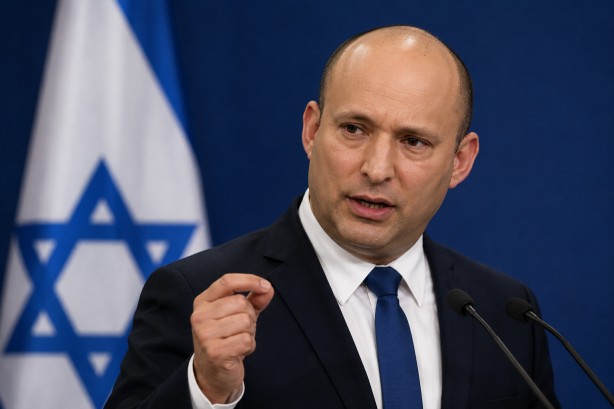
As Israel gears up for its upcoming election on October 27, former Prime Minister Naftali Bennett has launched a critique against the current Prime Minister, Benjamin Netanyahu, accusing him of running a divisive political campaign. Bennett warns that this approach could heighten the risk of violence against Netanyahu’s political adversaries. In a recent interview linked to a new book chronicling his political journey, Bennett painted a picture of Netanyahu’s leadership veering towards authoritarianism. He further accused media and political networks aligned with Netanyahu of disseminating antagonistic rhetoric aimed at his opponents.
Particularly concerning to Bennett is the safety of Gadi Eisenkot, who he regards as a formidable contender against Netanyahu. Bennett fears that the unrelenting political attacks could lead some individuals to perceive opposition figures as foes, potentially inciting violent actions against them. Reflecting on his own experiences, Bennett recounted the tumultuous transition of power in 2021. He claimed that Netanyahu had cautioned him about the intense political backlash that would ensue if he formed a government with anti-Netanyahu factions, a warning Bennett admits he underestimated.
On the international front, Bennett criticized Netanyahu’s handling of Iran’s nuclear threat during his tenure from 2018 to 2021. He argued that Netanyahu’s government did not adequately prepare for the escalating nuclear capabilities of Iran. Bennett asserted that upon assuming office, his administration bolstered intelligence, military planning, and preparations, which later played a crucial role in enabling Israel to execute successful operations against Iranian targets.
In a notable shift from his previous stance, Bennett has now come out in favor of instituting term limits for Israeli prime ministers. This change highlights a broader willingness to adapt his political strategies. As the election looms closer, Bennett has expressed readiness to collaborate with other opposition leaders to block another Netanyahu-led administration, even if it means accepting a diminished role in the political arena.