
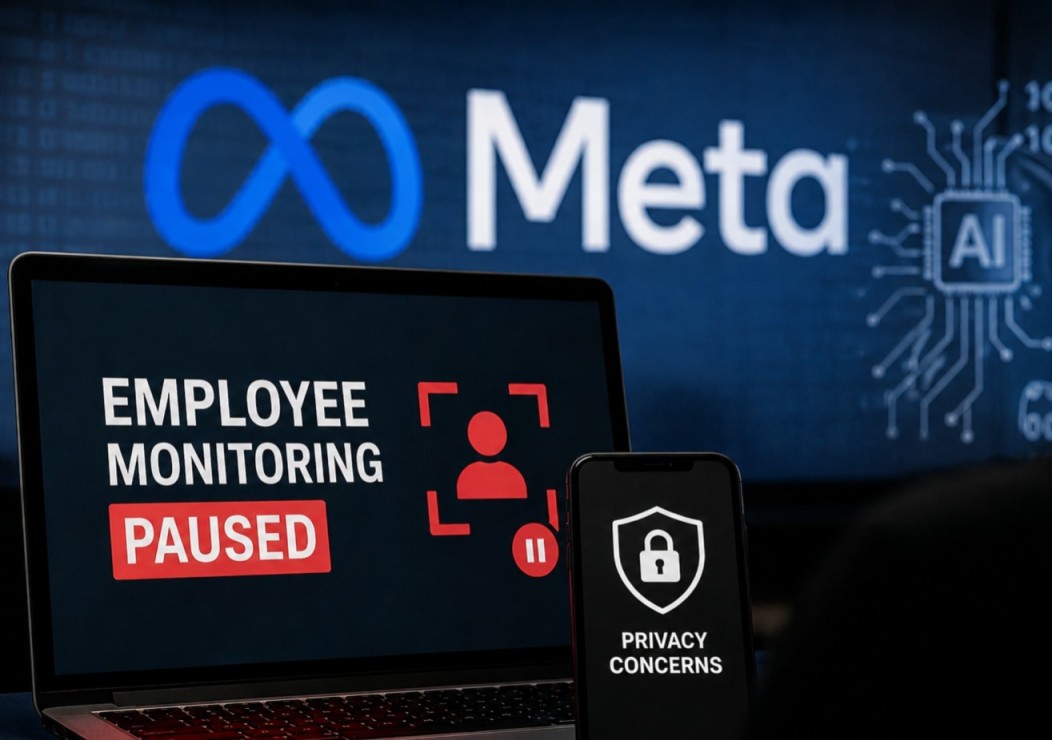
Meta recently halted an internal initiative aimed at gathering employee activity data to train its artificial intelligence models, following backlash over privacy issues and resistance from its workforce. This program, called the Model Capability Initiative, tracked various employee activities such as keyboard strokes, mouse movements, and the content displayed on computer screens.
Employees raised significant concerns about the implications of such data collection on their privacy, consent, and trust. The initiative encountered serious opposition, with over 1,600 workers signing a petition demanding an end to the collection of their computer usage data. Despite Meta’s assurances that the program incorporated privacy safeguards and that no evidence suggested misuse of the gathered information, the company decided to pause the initiative to reevaluate its system and data practices.
This decision comes in the context of Meta’s ongoing commitment to expanding its artificial intelligence capabilities. The company has been channeling substantial computing resources and effort into enhancing its AI models. Meta posits that insights drawn from the work patterns of skilled employees could be instrumental in refining AI technology.
The situation underscores the broader, intensifying debate over the methods companies employ to collect data for AI development, as well as the delicate balance between advancing technological capabilities and safeguarding employee privacy. As such, the incident at Meta reflects a growing tension in the tech industry about the ethical boundaries of data usage in AI training.