
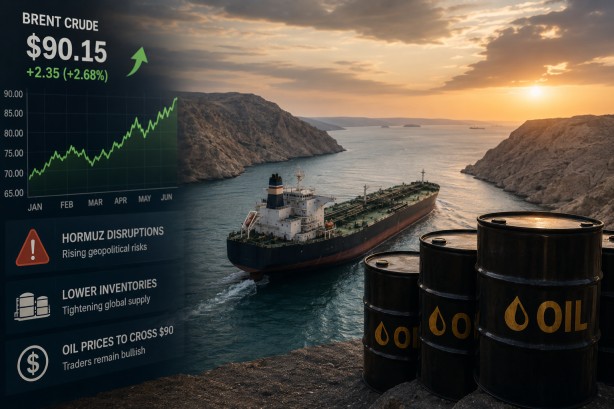
Oil prices have surged to their highest weekly increase since April, as Brent crude nears $85 per barrel following an 11% rise over the past week. This uptick is largely attributed to renewed geopolitical tensions between the United States and Iran, which have disrupted supply routes in the Middle East and led to a slowdown in tanker traffic through the crucial Strait of Hormuz. Despite this rally, experts suggest that Brent crude will require a sustained disruption in the Strait or a definitive tightening of global supplies to surpass the $90 per barrel mark.
The US benchmark, West Texas Intermediate, is also on the rise, approaching the $80 mark. The oil market’s current dynamics are shaped by the strategic importance of the Strait of Hormuz, a key maritime chokepoint through which about 20% of the world’s oil supply is transported. Concerns over regional stability have prompted shipping companies to closely monitor the situation, as tanker movements remain sluggish amid heightened security risks.
While Brent crude reached a high of $87.55 per barrel earlier in the week, it has been unable to consistently maintain these levels. Market analysts attribute this to the anticipation of diplomatic interventions that might avert a prolonged crisis. The focus remains on how these diplomatic efforts will unfold, which could either stabilize or further exacerbate tensions, thereby influencing oil prices.
The ripple effects of these developments are evident in fuel markets, where refining margins in the United States have increased due to tightening diesel and gasoline supplies. European markets are also feeling the pressure, compounded by disruptions in Russian exports that add to global supply concerns. Analysts caution that without a notable decline in inventories or a significant escalation in US-Iran tensions, oil prices are unlikely to see a substantial move above the $90 threshold.
As traders continue to navigate these complexities, their attention is firmly fixed on upcoming supply data and diplomatic progress. These factors will be pivotal in determining the future trajectory of global oil markets, as stakeholders assess the potential for either further price increases or a stabilization in the face of ongoing geopolitical challenges.