
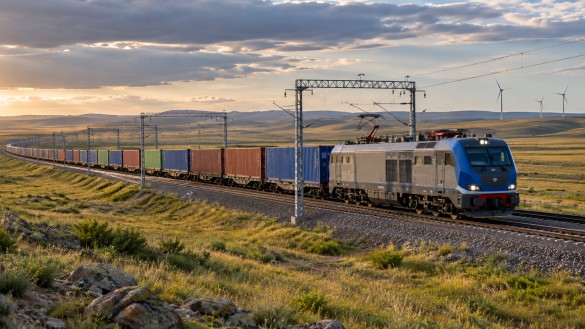
Kazakhstan is set on enhancing the Trans-Caspian International Transport Route (TITR), known as the Middle Corridor, to bolster trade links between Asia and Europe while prioritizing environmentally sustainable transport. This initiative was spotlighted at a session organized by Kazakhstan’s Ministry of Trade and Integration and QazTrade during the 31st United Nations Climate Change Conference (COP31) held in Türkiye on November 16.
The Middle Corridor is a nearly 7,000-kilometer trade route that traverses Kazakhstan, the Caspian Sea, and the South Caucasus, offering an alternative pathway to European markets. With freight volumes soaring from 800,000 tonnes in 2020 to 4.5 million tonnes in 2024, and container transportation reaching approximately 77,000 twenty-foot equivalent units (TEUs) by 2025—a 36% increase from the previous year—Kazakhstan is focused on further development.
Plans to advance the corridor include implementing digital logistics systems, boosting transport capacity, and adhering to more rigorous environmental standards. The country is keen on ensuring its trade infrastructure aligns with international market sustainability requirements. Vice Minister of Trade and Integration Zhanel Kushukova emphasized that Kazakhstan’s export competitiveness depends on product quality, environmental standards, and efficient international transportation.
The Port of Kuryk, located on Kazakhstan’s Caspian coast, exemplifies these efforts. It has achieved EcoPorts certification and ISO 14001 environmental management certification, underscoring its dedication to environmentally responsible operations. Additionally, digitalization is a major priority, aiming to enhance coordination among participating countries, introduce unified digital systems, and improve cargo tracking transparency. These measures are expected to minimize administrative delays and increase the reliability of international shipments.
Kazakhstan believes that fostering closer cooperation among countries along the Middle Corridor is crucial for developing it into an efficient and environmentally sustainable trade connection between Asia and Europe. This collaborative approach is seen as essential for realizing the route’s full potential as a green trade passage.