
Homeowners and borrowers received an early holiday gift this week as the Bank of England announced a reduction in interest rates to 3.75%. The decision marks a quarter-point cut intended to breathe life into a sluggish economy during the crucial pre-Christmas trading period. While the move offers immediate relief to those with variable-rate mortgages, the decision was far from unanimous among policymakers.
The Monetary Policy Committee (MPC) was split down the middle, voting 5-4 in favor of the cut. This narrow margin highlights a significant internal debate regarding the stability of the UK economy. While the majority felt that falling inflation justified the ease in borrowing costs, a strong minority expressed deep concern that inflation could flare up again, particularly within the services sector.
Andrew Bailey, the Bank’s governor, signaled that while the trend for rates is downwards, borrowers should not expect rapid-fire reductions in the new year. He described future decisions as a “closer call,” emphasizing that the committee is walking a tightrope between stimulating growth and keeping a lid on price rises. The bank now expects inflation to hover closer to its 2% target by early next year.
The backdrop to this decision is a mix of promising and worrying economic data. Inflation has dropped to 3.2%, helped significantly by cheaper food prices, yet GDP figures suggest the economy is stalling, having shrunk by 0.1% in October. The Chancellor, Rachel Reeves, welcomed the cut as “good news for families,” claiming it represents the fastest pace of rate cuts in 17 years.
However, business groups remain cautious. Many cite the recent increase in employer national insurance contributions as a “brake” on economic recovery. As the Bank navigates these choppy waters, the focus now shifts to 2026, with hopes that these lower borrowing costs will finally rekindle consumer confidence and pull the economy out of its current stagnation.
Cheaper Loans for Christmas: Bank of England Slashes Rates to 3.75%
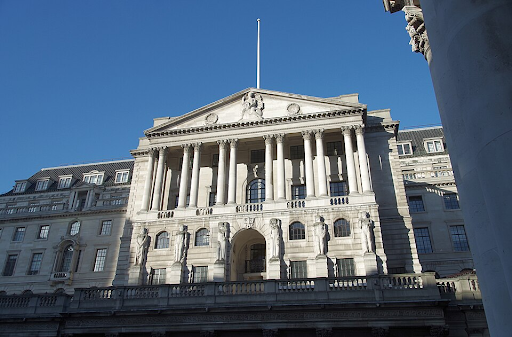
Photo by mattbuck, via wikimedia commons
44